
Are we closer to mind controlled technology than we realise?
Imagine controlling a computer, robot or even a vehicle without touching a screen, keyboard or controller. No implants, no surgery, just thought. It sounds like science fiction, but new breakthroughs in brain to machine communication are bringing this idea closer to reality than ever before.
For years, brain computer interfaces have relied on implanted devices placed directly in the brain. While those systems have shown incredible promise, they come with obvious challenges. Surgery is invasive, expensive and not something most people would consider for everyday technology. Now researchers are exploring a different path. External sensors that can read brain activity from outside the skull are beginning to show surprising levels of accuracy.
How it works
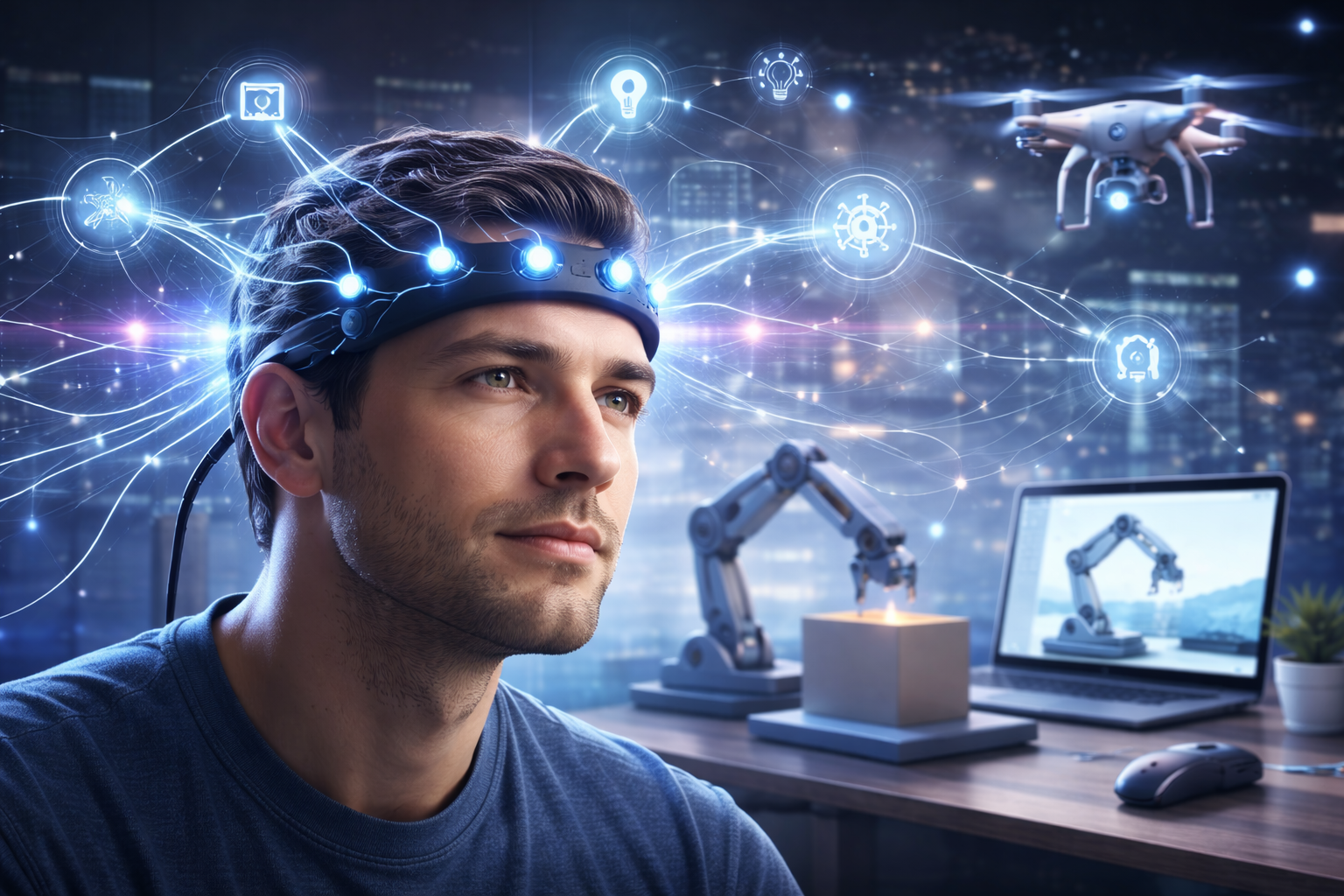
Non-invasive brain sensing technologies use advanced headsets equipped with sensors that detect electrical signals generated by the brain. These signals, often referred to as neural patterns, can be interpreted by artificial intelligence systems and translated into commands. Instead of pressing a button, you think about an action and the system responds.
Researchers have already demonstrated people typing messages, moving cursors and controlling robotic arms using only thought. While these systems are still developing, the speed and accuracy are improving rapidly. With the help of machine learning, computers are getting better at recognising individual neural patterns and adapting to each user.
Why this matters
At first glance, mind controlled technology might seem like a novelty. But the real impact could be enormous. For individuals with mobility impairments, this technology could provide new levels of independence by enabling control of devices without physical movement. For industries, it opens the door to entirely new ways of interacting with machines.
Imagine technicians controlling equipment while their hands remain free, or warehouse operators navigating systems without stopping their workflow. While we are not quite there yet, the direction is clear. Human and machine interaction is becoming more seamless and intuitive.
Challenges ahead
Despite the progress, there are still hurdles to overcome. External sensors must become more precise and comfortable for long term use. Systems need to filter out background noise from the brain’s constant activity. Privacy and security also remain important considerations. After all, interpreting thoughts raises important questions about data protection and consent.
But innovation is moving quickly. Advances in sensor technology, artificial intelligence and wearable devices are accelerating development. What once required bulky lab equipment can now be achieved with lightweight wearable headsets.
A glimpse into the future
As we move further into this decade, the line between human intention and digital action will continue to blur. Brain to machine communication without implants represents a major step toward a future where technology responds naturally to us, rather than the other way around.
For now, we are at the early stages. But if current research continues at this pace, the idea of controlling systems with thought alone may soon shift from experimental labs into real world applications.
The future of interaction may not be touch or voice. It might just be thought.


