
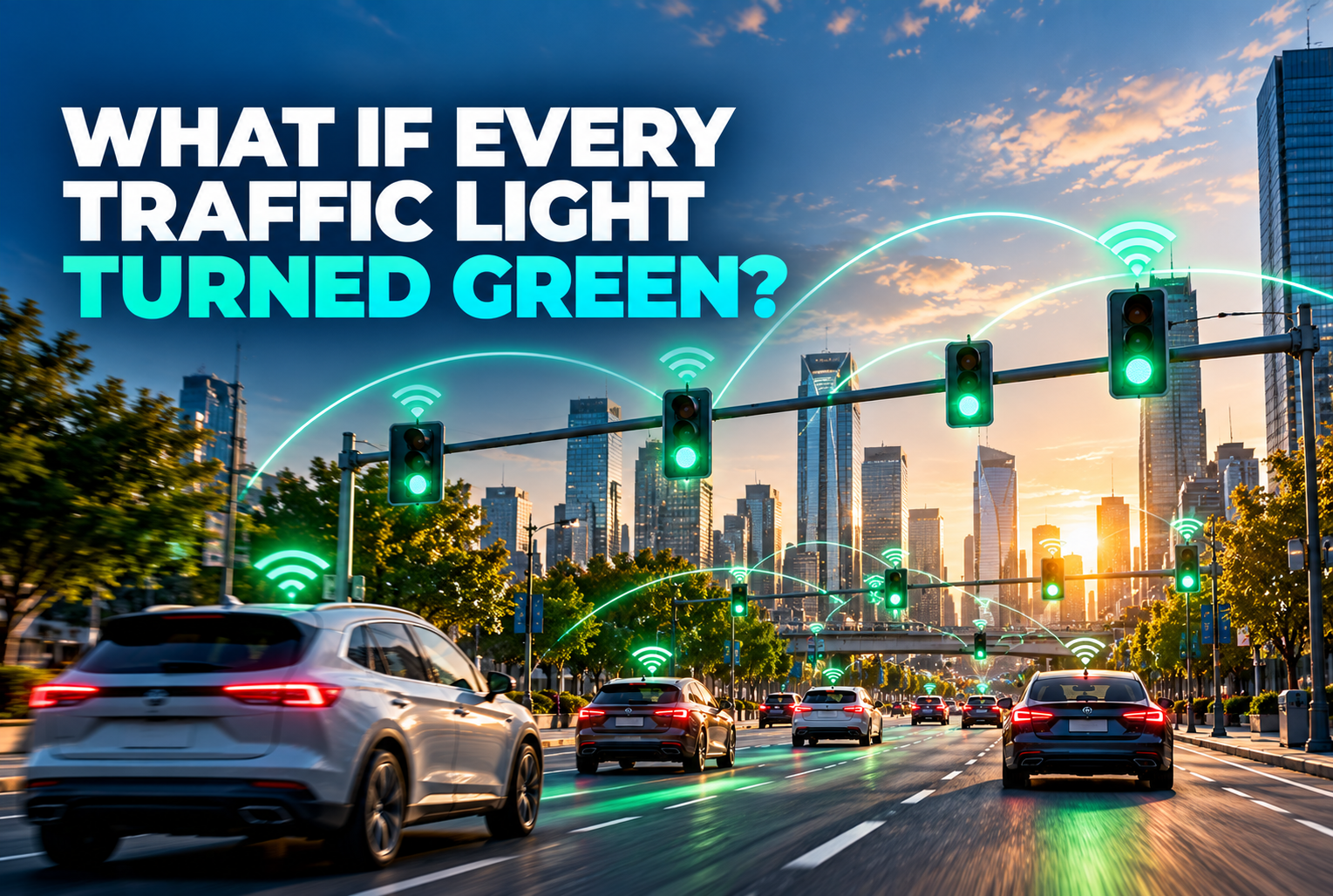
Could smart traffic lights finally put an end to traffic jams?
Imagine driving through a busy city during peak hour. You approach an intersection, and just as you’re about to slow down, the light turns green. At the next intersection, the same thing happens. And the next. No frustrating stops, no endless queues and no wondering why you’re sitting at a red light when there’s absolutely nobody coming the other way.
Sounds too good to be true? Well, technology is bringing us closer to making this a reality.
The Problem With Traffic Lights Today
Most traditional traffic lights operate using programmed schedules, vehicle detectors or a combination of both. While they help manage traffic, they don’t always respond effectively to rapidly changing conditions.
That’s why you might find yourself waiting at an empty intersection while the light stays stubbornly red.
Now imagine traffic lights that could actually understand what’s happening around them.
Meet the Traffic Lights That Can Think
Smart traffic systems use technologies such as cameras, sensors and artificial intelligence to monitor traffic conditions and adjust signal timings. Instead of following fixed schedules, these systems can respond to changing traffic volumes, giving more green time to busy approaches while reducing unnecessary waiting elsewhere.
Some cities are already experimenting with this technology. In Pittsburgh, Pennsylvania, an adaptive traffic signal project known as SURTRAC demonstrated how intersections could use real-time information to coordinate traffic movements and reduce delays.
But what if we took things even further?
When Cars Start Talking to Traffic Lights
Imagine a future where your car communicates directly with the intersection ahead. Using vehicle-to-infrastructure (V2I) technology, connected vehicles could share information such as their location, speed and direction with traffic management systems. The traffic lights could then coordinate their timings to help vehicles move more smoothly through the city.
An ambulance approaching an intersection? The system could prioritise its journey. A bus running behind schedule? Traffic signals could help reduce delays. A busy pedestrian crossing? The system could account for people waiting to cross. Rather than every intersection operating independently, an entire city could begin working together.
Could Traffic Jams Become a Thing of the Past?
Unfortunately, even the smartest traffic lights can’t make congestion disappear completely. Roads have physical capacity limits. If thousands of vehicles are trying to use the same road at once, changing the lights won’t magically create more space.
There’s also an interesting possibility: if driving becomes easier, more people might choose to drive, eventually creating additional congestion. And then there are the challenges of cybersecurity, privacy, system reliability and ensuring pedestrians and cyclists aren’t disadvantaged.
The Future Might Be Greener Than We Think
While completely eliminating traffic jams may be unrealistic, intelligent intersections could make everyday travel significantly smoother. Fewer unnecessary stops could mean shorter journeys, less fuel wasted while idling and reduced vehicle emissions. Emergency services could move more efficiently, and cities could make better use of their existing roads.
The most exciting part? Much of the technology needed already exists. The challenge is connecting it all safely and effectively.
So, will we ever live in a world where every traffic light turns green just as we approach? Probably not every time. But a future where traffic lights work together to keep entire cities moving? That might be closer than we think.


