
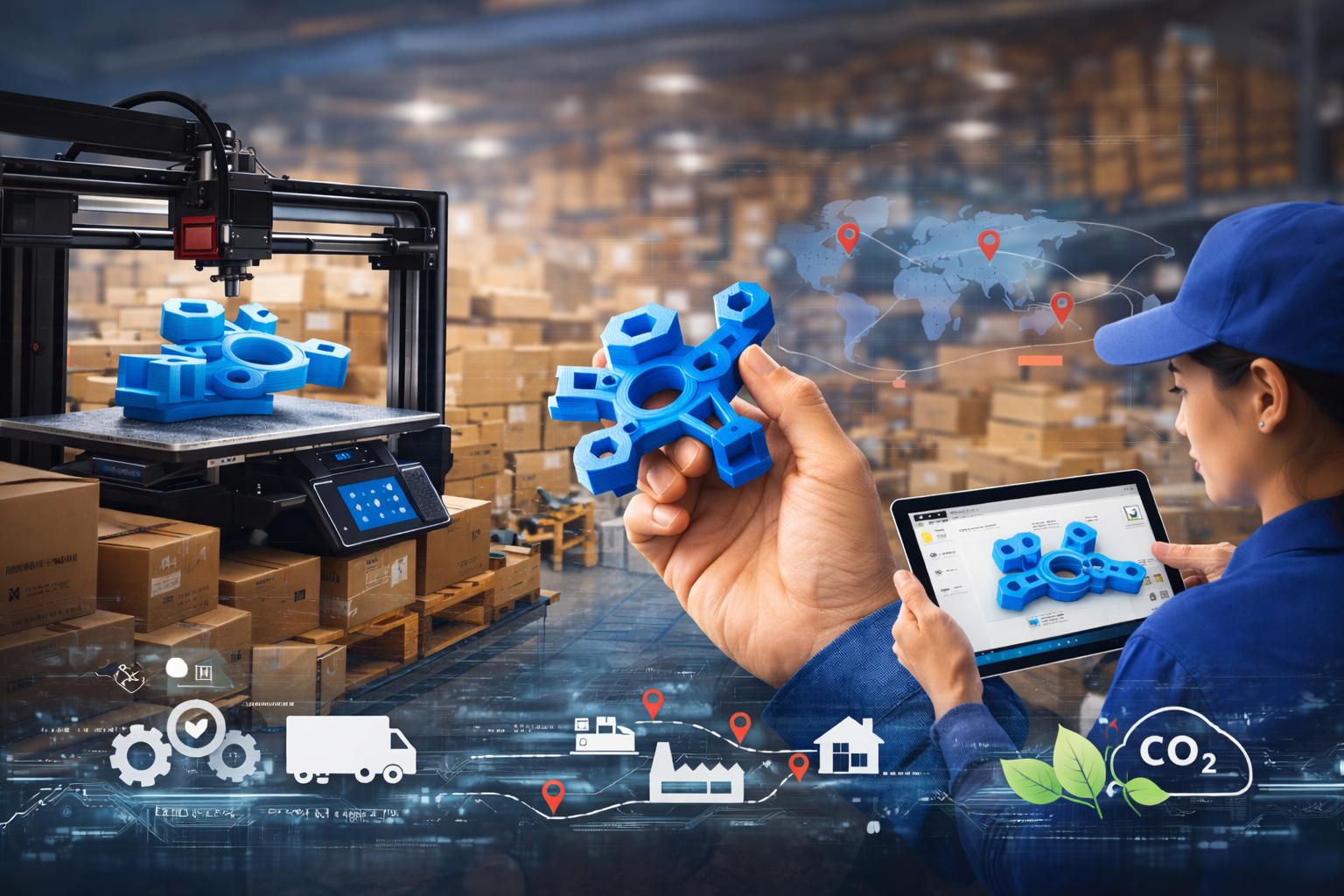
The traditional supply chain has always relied on long lead times centralised manufacturing and complex global logistics. But that model is being challenged by a technology that allows products to be created exactly where and when they are needed. 3D printing also known as additive manufacturing is quietly reshaping how supply chains operate and the impact is already being felt across multiple industries.
From Warehouses Full of Stock to Digital Inventory
One of the most powerful shifts enabled by 3D printing is the move from physical inventory to digital inventory. Instead of storing thousands of spare parts in warehouses companies can now store design files and print parts on demand. This reduces storage costs eliminates overstocking and ensures critical components are always available when needed.
For supply chains this means fewer delays caused by missing parts and far greater flexibility when demand changes unexpectedly.
Faster Lead Times and Localised Manufacturing
Traditional manufacturing often involves long production cycles and international shipping. 3D printing removes many of these steps. Parts can be produced locally near the point of use which dramatically shortens lead times. A component that once took weeks to arrive can now be printed in hours.
Localised manufacturing also improves resilience. When global disruptions occur businesses with 3D printing capability are less dependent on distant suppliers and more capable of maintaining operations.
Customisation Without Complexity
Additive manufacturing allows parts to be customised without expensive retooling. This is especially valuable for low volume specialised components or legacy equipment where replacement parts are no longer mass produced.
Supply chains benefit from this flexibility by being able to support a wider range of products without adding complexity or cost to production planning.
Sustainability Gains That Matter
3D printing is also helping organisations reduce their environmental footprint. By producing only what is needed material waste is significantly reduced. Transport emissions drop when parts are manufactured closer to where they are used. In many cases lighter designs made possible through additive techniques also reduce energy use during transport and operation.
For companies focused on sustainability goals 3D printing offers a practical way to make measurable improvements.
Challenges Still to Overcome
While the benefits are clear 3D printing is not a replacement for all traditional manufacturing. Material limitations certification requirements and production speed still restrict its use for high volume items. However the technology continues to advance rapidly with stronger materials faster printers and wider industry acceptance.
A Supply Chain Transformation in Progress
3D printing is not just a manufacturing innovation. It is a supply chain transformation. By enabling on demand production shorter lead times and decentralised manufacturing additive technology is giving organisations more control agility and resilience.
As adoption grows the supply chains of the future will not just move products efficiently. They will print them exactly when and where they are needed.


