
A Simple Idea That Transformed Global Commerce
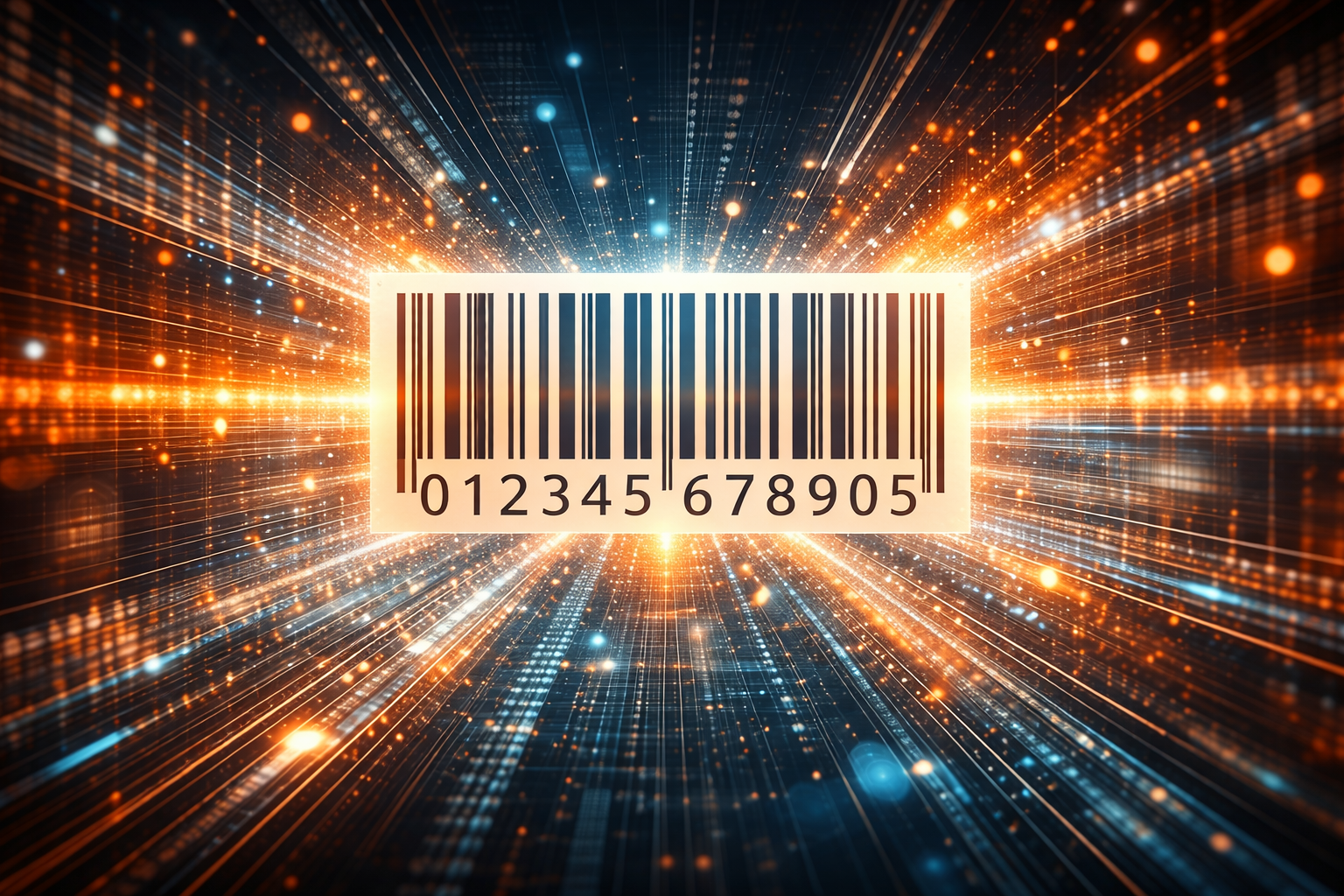
It is easy to overlook the barcode. It sits quietly on almost everything we buy, from a carton of milk to a pallet in a warehouse. Most people never think twice about it. A quick scan, a beep and the process moves on. But behind that small set of black lines is one of the most important innovations in modern commerce. Because without it, the world as we know it would move a lot slower.
A Simple Idea, Decades in the Making
The concept of the barcode dates back to the late 1940s, when two inventors, Norman Joseph Woodland and Bernard Silver, began exploring a way to automatically capture product information. Their idea was inspired by Morse code. Instead of dots and dashes, they used lines of varying widths to represent data that could be read by a machine. It was a simple concept, but the technology to support it was not ready. For years, the idea remained largely theoretical. It was not until the 1970s, with advances in computing and scanning technology, that the barcode finally became practical. Then came a moment that quietly changed everything.
The First Scan That Started It All
In 1974, at a supermarket in Ohio, a pack of chewing gum became the first product ever scanned using a barcode. That small moment marked the beginning of a new era. Retailers could now process transactions faster and more accurately. Pricing errors were reduced. Inventory tracking became possible at a level that had never been seen before. What started as a way to speed up checkouts quickly became the foundation for something much bigger.
From Checkout Lines to Global Systems
As adoption grew, the barcode evolved beyond retail. It became a universal language for products, enabling businesses to track items across locations, systems and even countries. In warehouses, it transformed how goods were received, stored and picked. In logistics, it enabled real time tracking and visibility. In manufacturing, it improved accuracy and reduced costly errors. Put simply, it connected the physical world to digital systems. And once that connection was made, everything changed.
Why the Barcode Still Matters Today
In a world now filled with automation, AI and advanced analytics, it is tempting to think of the barcode as old technology. In reality, it is more relevant than ever. Every scan feeds data into systems that drive decision making. Every label ensures accuracy across complex operations. Every interaction keeps processes moving. Without reliable data capture at the source, even the most advanced systems fall apart. The barcode remains one of the simplest and most effective ways to make that happen.
The Foundation of Modern Supply Chains
Today’s supply chains rely on speed, accuracy and visibility. Barcodes play a critical role in all three.
They allow businesses to:
- Track inventory in real time
- Reduce manual errors
- Improve efficiency across operations
- Maintain consistency at scale
From a single supermarket shelf to a global distribution network, the same principle applies. Scan, capture, move. It is simple. And that is exactly why it works.
Looking Ahead
While the barcode continues to evolve with technologies like RFID and advanced data capture, its core purpose remains unchanged. It is about turning information into action. The future will bring smarter systems, more automation and greater connectivity. But those systems will still rely on accurate, real time data. And that journey often begins with a single scan.
A Small Innovation with a Lasting Impact
The barcode may not be the most exciting piece of technology at first glance. It does not move, think or predict. But it enables everything that does. It is a reminder that sometimes, the most powerful innovations are not the most complex. They are the ones that quietly become essential. And in the case of the barcode, a simple idea did not just improve the way we shop. It helped build the foundation of global commerce.


