
The Science of Queues
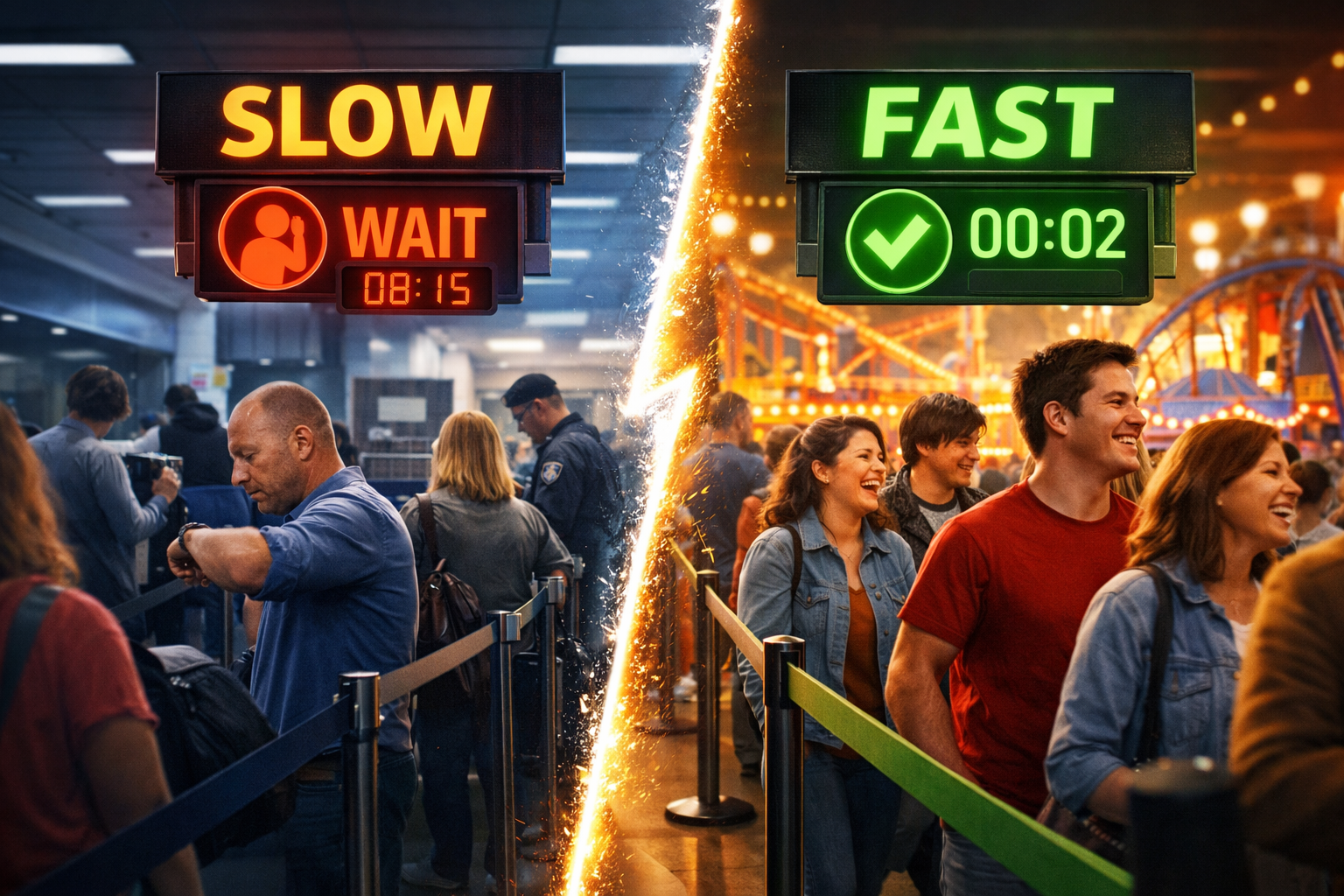
You’ve probably experienced this before. Two lines, the same number of people. You pick one… and it barely moves. The other? Somehow flying. So what actually happened?
It’s Not Luck. It’s Flow.
Queues can feel random, but they are not. There is real science behind why some lines move faster than others. Airports, theme parks and supermarkets all deal with the same challenge. How do you move people through a system as smoothly as possible? Put simply, it comes down to flow.
The Bottleneck Problem
Every queue has a hidden weak point. It might be a slow checkout, a complicated transaction or a moment where staff need to step in. That one delay can hold everything up behind it. This is known as a bottleneck. Once a bottleneck forms, the entire system slows down, even if everything else is running smoothly.
Why One Line Always Seems Faster
It is easy to assume that the shortest line will move the fastest. In reality, that is not always the case. A shorter line with one complex customer can take longer than a longer line that is moving steadily. What matters is not just the number of people in the queue. It is how consistently each step progresses. Consistency will almost always beat bursts of speed.
The Psychology of Waiting
Here is where things get interesting. Two queues can move at the same speed and still feel completely different.
Why?
Because waiting is not just physical. It is psychological. We tend to feel delays more when the line stops moving, when we cannot see progress or when the process feels unclear. This is why airports often use winding lines and theme parks design queues that keep people moving. Even small movements create a sense of progress. And that feeling matters more than we think.
What the Best Systems Get Right
The most efficient environments are not just fast. They are predictable. They focus on maintaining a steady flow rather than short bursts of speed. They work to remove bottlenecks early and provide clear visibility of progress. It is not about rushing. It is about creating rhythm.
So What Does This Mean for Operations?
This idea goes far beyond queues. It applies to how work moves through any operation. Every business has its own version of a queue. Orders waiting to be picked, goods waiting to be processed or tasks waiting to be completed. And just like a supermarket line, one delay can slow everything down. In short, efficiency is not just about speed. It is about flow.


